Accomplishments
- Selected for Puentes, YC Startup School, and Minerva University.
- Fastest of 440 in Silver.dev’s live coding interview; joined as engineer #2.
- Won 2nd and 3rd places at hackathons.
- From 6-min to 1.3-hour jogs and from 42.5 to 60 kg in less than a year.
- All the projects I've made I guess.
Autobiography
0–16: Growing up in Buenos Aires

I was born and raised in Caballito, Buenos Aires, Argentina, in August 2007, in a middle-class family with my brother, 3 years older than me, and two parents, both graduated systems engineers from the UTN.
My life as a kid was pretty normal. Football (soccer) has been my favorite sport, and Minecraft my favorite video game. I started playing football at a club when I was 7 and stayed there for 5 years. At around 10, I have a clear memory, lying in my bed upside down, daydreaming about becoming a professional player when I grew up. However, I wasn't built for that; even though I had a healthy lifestyle, I was quite skinny and pale. I used to think that was just "normal for me," until years later I realized it was not.
Discovering programming
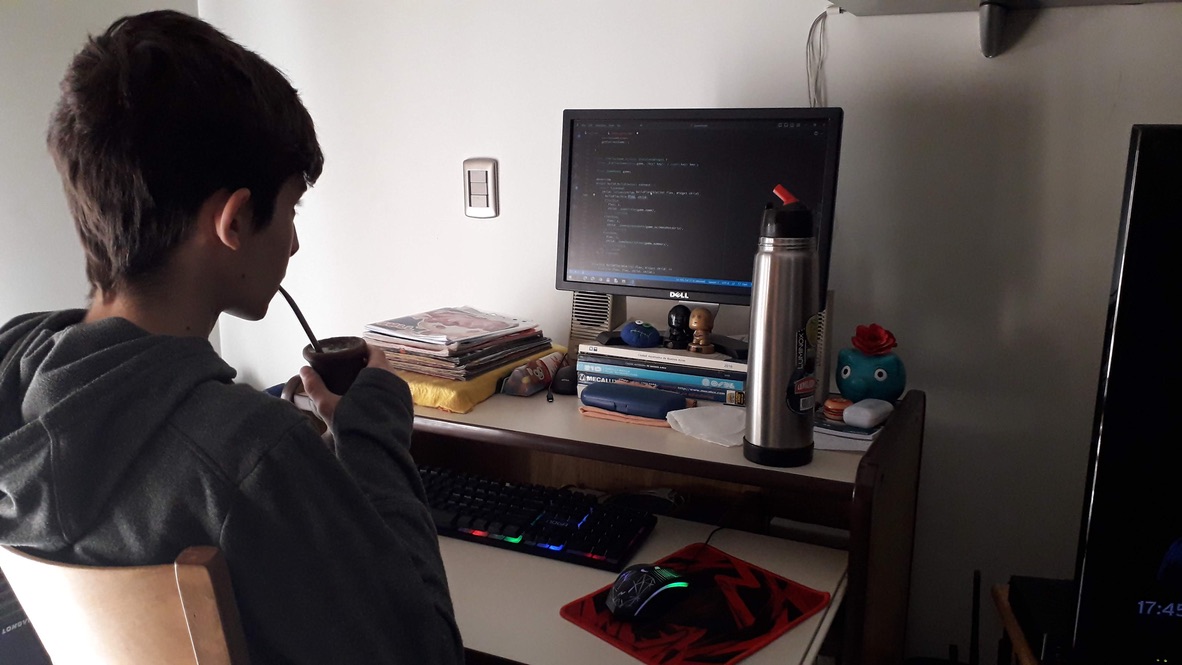
2020 arrived with the pandemic and my last year at primary school (7th grade). A few months locked in and many hours spent playing computer games, I started to question what I was spending my time on. At around the same time, my dad had suggested I check out programming, to see whether I was interested in it. So I checked it out.
I started to learn programming in May 2020, when I was still 12, mostly with YouTube videos (ChatGPT didn't exist yet) and by creating simple scripts with Python. One day, wondering how to get out of the terminal environment and display actual graphics, I discovered pygame. Tutorials here, pygame docs there, I made some small prototypes until by November I built my first video game ever.
I really enjoyed building stuff (which hasn't changed), so I continued to develop more projects. During the next 3 years, I kept building personal projects as a hobby, including, among others:
- a speedrun platformer game, made with Godot Engine, which triggered competition among my classmates;
- a game discovery app, made with Dart and Flutter, which has been getting organic downloads on the Google Play Store ever since I published it;
- and an online multiplayer game, made with Python, FastAPI and Godot Engine, which taught me about computer networking.
That's how I learned to program, basically. I used to decide to build X, which required me to learn Y in the process, and I'd also try to make each project different than the previous one in terms of learning, so each of them could teach me something new. Besides, as I grew up during my teenage years, my interest shifted increasingly more to programming.
At around the same time I started with programming, I started reading non-fiction books. I used to read the books on my dad's bookshelf, such as Mathematics, Are You There?, by A. Paenza; The 7 Habits of Highly Successful People, by S. Covey; Rich Dad, Poor Dad, by R. Kiyosaki; and Create or Die, by A. Oppenheimer. I then downloaded more books from the internet and spent all my money from birthday gifts to buy myself a Kindle. Looking back, all this reading shaped a good portion of my current mindset toward life overall. As detailed below, a clear example of this is how I've approached fitness.
Health issues
At 14, I started playing football again in another club. Simultaneously, my physique got weaker, notably paler, and more underweight.
As an anecdote, in the club we once did an endurance test, and I was the worst one, even among the category below mine. Another time, my dad and I went for a run to the park and, after just 6 minutes of slow, non-stop jogging, I had to sit down on the floor due to absolute exhaustion. "It seems weird that you can't continue given your age and active lifestyle," he said. I agreed, but the only solution was to just keep pushing harder. Or at least that's what I believed and said.
Given that I really wanted to get better at the sport and wasn't getting noticeable results, in the summer of 2024, I asked my coach what I could do to improve. He gave me a workout plan, consisting of timed sprints and jogging, and I followed it to the letter.
At 16, on a sunny day of the 2024 summer holidays with my family at Miramar, we went to the beach in the morning, as usual. As on any other day, I swam in the sea.
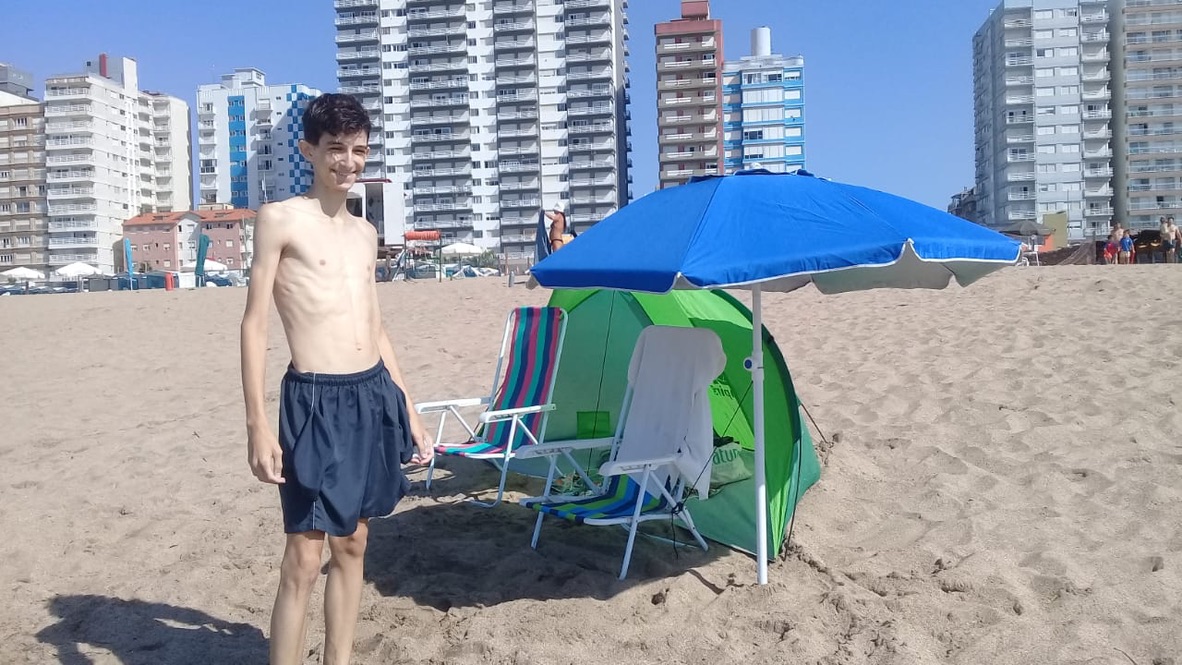
February 2024, with a BMI of 14.9 (severely underweight).
That same day, in the afternoon, partly because I'd been having digestive issues over the last days, partly because it got cloudy, my mom suggested going to the hospital for a checkup.
This kid needs hospitalization and a blood transfusion.
Wait, what? I had just swum in the sea that morning. But indeed, I got hospitalized and, after a few days, diagnosed with celiac disease.
Although I got condemned to extreme caution when eating out for the rest of my life, it wasn't all that bad. I used to weigh 42.5 kg, and after just two months of a strict diet, I gained around 10 kg. My skin also got to a normal state, and not just for what I thought was normal for me, but actually normal and healthy.
As the months passed, I continued improving even more, reaching 60kg of bodyweight and 1h 20min of nonstop jogging.
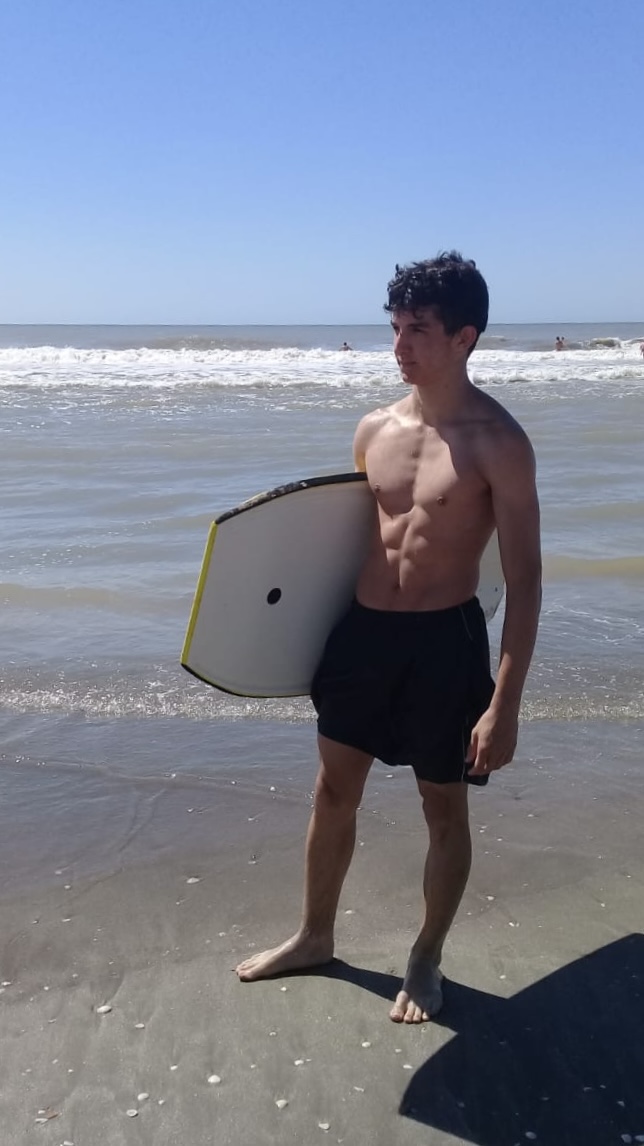
January 2025, with a BMI of 21 (healthy).
Beyond the physical aspect, this experience showed me how sometimes you don't realize how bad your current state is until you start to be at a decent, actually normal level. It also made me very disciplined and resistant to pain over prolonged periods of time, given how hard I pushed myself to keep up with my teammates.
Besides, it was very mind-opening realizing that my formerly indisputable belief (no results = must push harder) was actually wrong. It was like realizing I'd been running with blinders and had them just removed, finally being able to observe how the end goal (physical improvement) had been next to me all the time (by switching diets), yet I wasn't able to see the big picture (that I have celiac disease).
Basically, the well-known saying of work smarter, not just harder.
16–18: Taking the leap
First commercial project
That same year, when the school year started, I made my first money programming working for Siderplast S.A.. They told me that if I did a good job, they'd pay me well. Previously, I had only built apps and games, never full-stack applications, yet I accepted the challenge.
Three months passed working without knowing whether I was going to get paid or not, until one day they called and asked me how much I wanted to charge.
So then, combined with my little savings from gifts, I had accumulated a total of $2,620. Down to zero, I spent all of it to buy myself a MacBook and an iPhone, so I no longer had to share the home PC with my brother, which I often had to negotiate the time to use it, and also collapsed when running a few Docker containers.
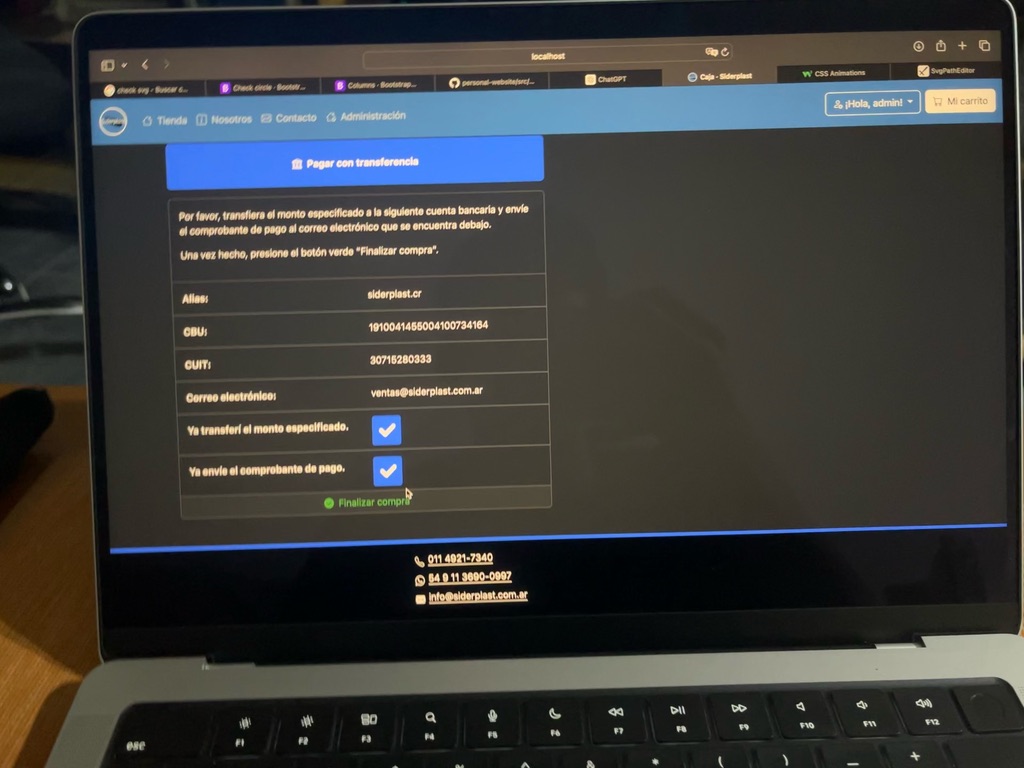
I kept working for around 6 months more, where I mastered Django, gained more experience interacting directly with a business, and learned how to handle a relatively large project.
First engineering team
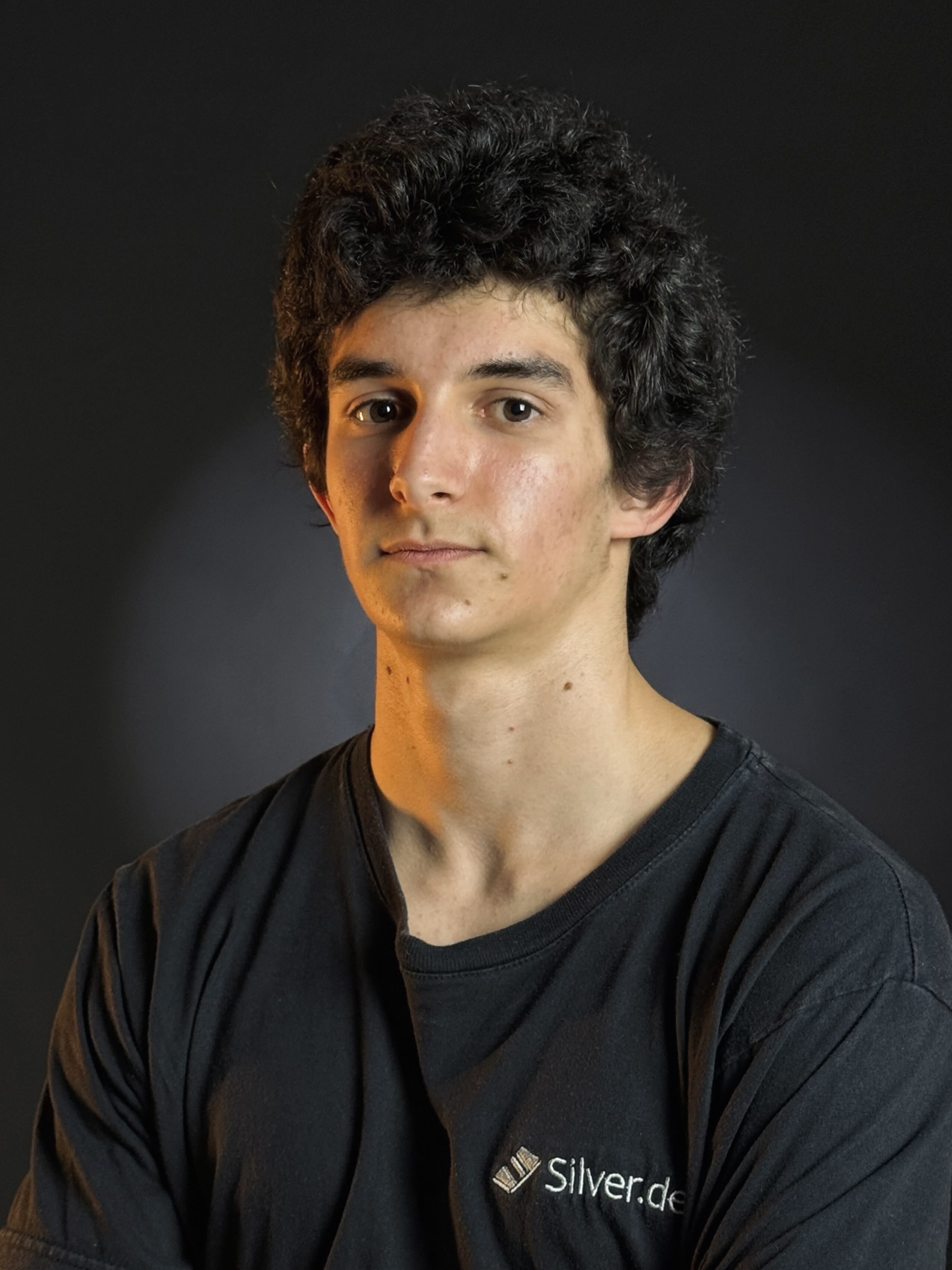
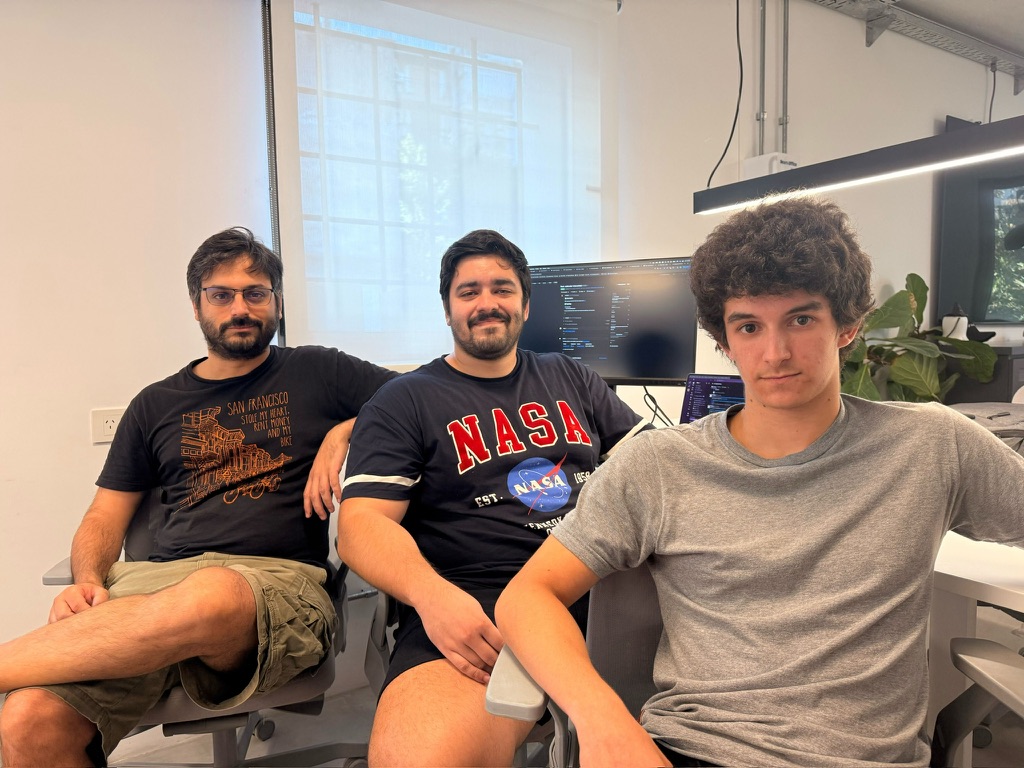
My first professional headshot, and the Silver.dev engineering team.
At 15, thanks to my dad's recommendation, I started listening to the Tecnología Informal podcast. I genuinely liked the way of thinking of the author, Gabriel Benmergui. My favorite episode is El Programador de Hierro (The Iron Programmer), where he compares the attitudes of two contrasting programmer archetypes: the iron one, who wants to get good just for the sake of it, is eager to win, and listens to those who point out his errors; and the wooden one, who is conformist, only does the job for the money, and is defensive against those who tell him that he's bad. I mention it in detail because I really resonate with the idea of living with an iron-like attitude.
Around two years later, Gabriel published the founding engineer job position at his company, Silver.dev. "This is my opportunity," I thought, even though I didn't meet the requirements (not even the working hours, since I was still attending high school in the mornings). But I applied, anyway.
A few days later, I received an email inviting me to the live coding interview. That alone was very surprising, given my poor background for the role. But apart from that, the email detailed the problems I had to solve, which seemed strange to me (what's the point of the interview then? everyone will pass it, I used to think). Ignoring my confusion about that, I just practiced those problems until I could solve them in time.
The interview day arrived, and, indeed, I had to solve the problems I had practiced. Only one of the two, actually, so I solved the problem in half of the available time. To my great surprise, that was record time, so Gabriel was fascinated and hired me as an intern. I later discovered that it was my answer to "Why are you interested in this position?" that attracted his attention in the first place, and that I had practiced way more than usual for the interview.
So, I joined as the 2nd engineer of the team, alongside Paske, who made me improve a lot. I mean, I didn't even know what a race condition was before. I also learned about product engineering and how to work as part of a team rather than just on my own. Besides, I've learned what the other side of job interviews looks like, eventually being the interviewer myself.
First hackathons
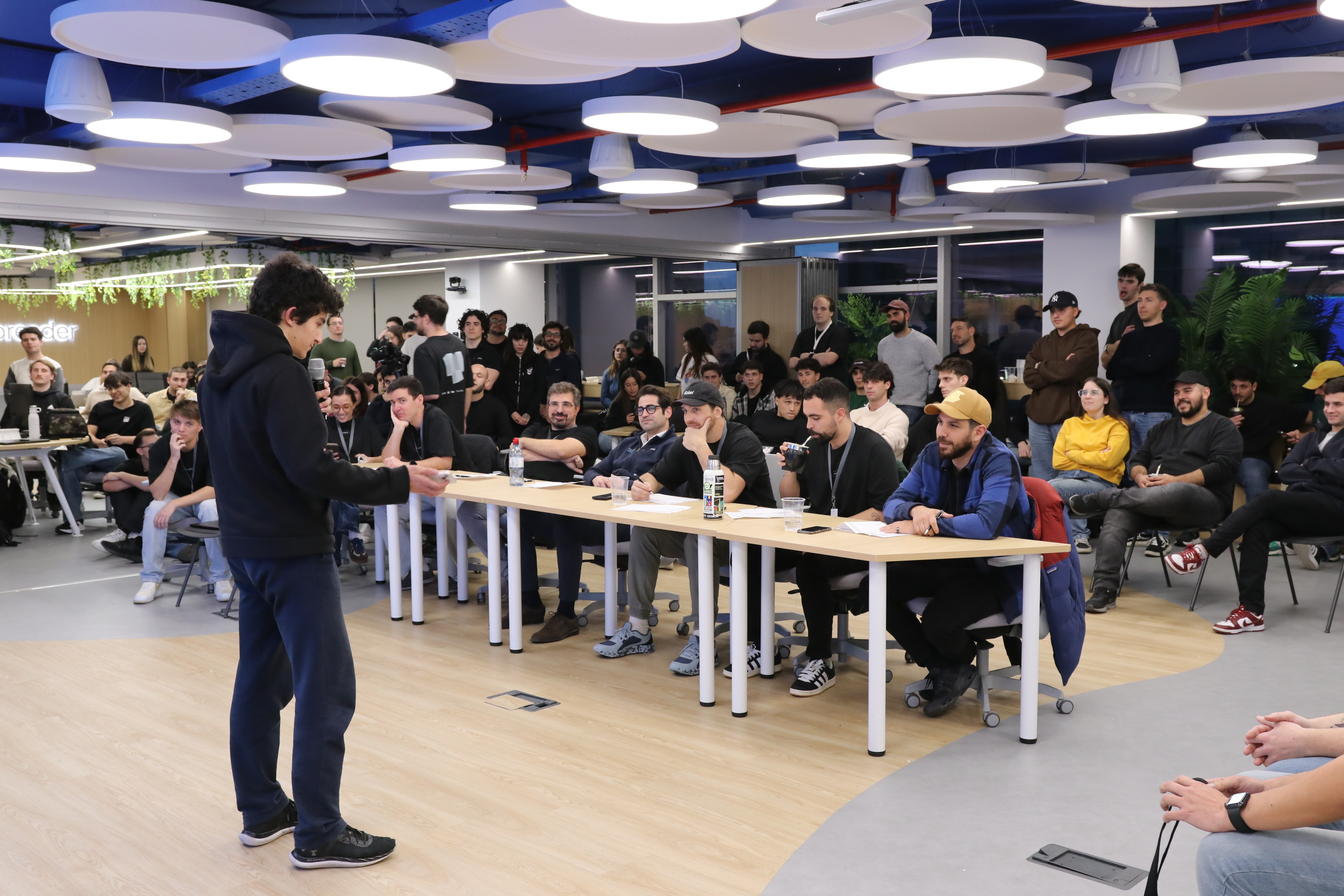
I participated in my first hackathon ever, ShipBA, alongside the only programmer friend I knew by that time and my cousin. Without sleeping, we built Noticiar, a TikTok-like AI-powered news app. Although we didn't win the competition, a bunch of people liked my presentation so much that they later invited me to more events, where I met even more people involved in tech.
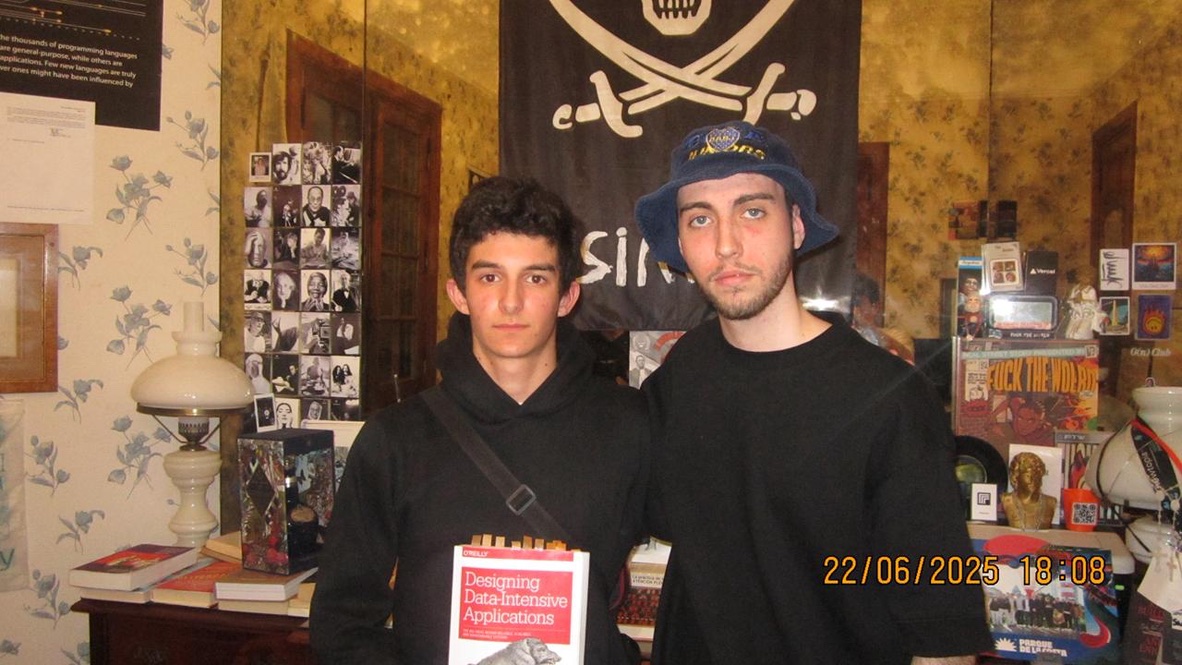
With Santiago Ruberto, founder and CEO of Melian
At my second hackathon, I placed 3rd with my team by assembling and presenting Nuvem Voice (a.k.a. el coso del cosito project), a customer service AI voice agent.
Apart from cool projects, the people I met in these events would later influence my decisions and greatly help me throughout my life, starting with the college decision.
First glance outside Argentina
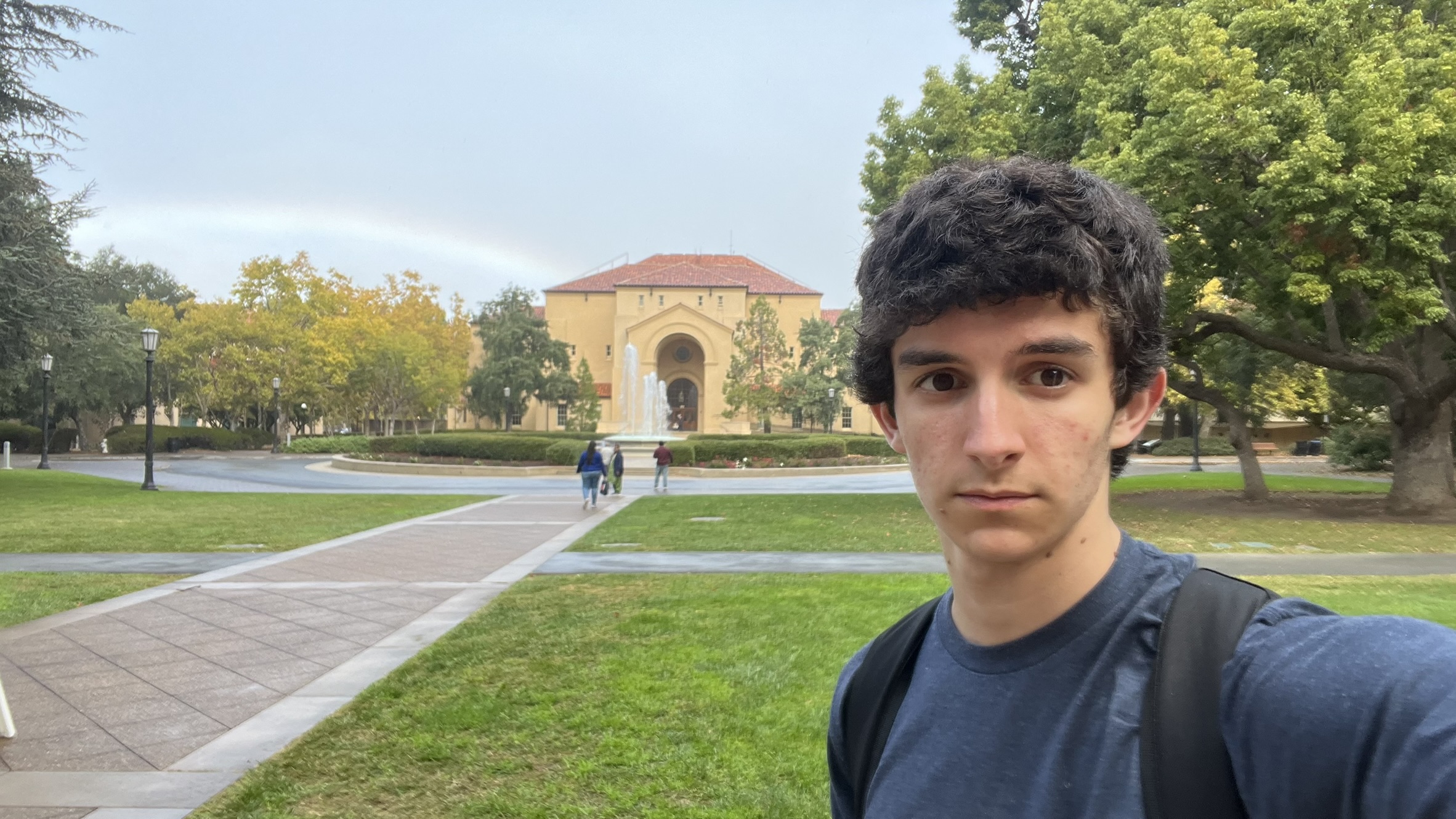
Being my senior year at high school, I had to decide what I wanted to do afterwards.
At first, given that I had already made money programming, I was doubting whether to go to college or not. To figure it out, I received several different suggestions. The most reasonable was to clarify to myself who I wanted to become in 10 years.
What was clear to me was that I wanted to create useful things that interested me. For that, both options were fine, though college is clearly better done young than old. Still, I wasn't completely sure to commit to that decision yet.
My college alternatives were mainly two:
- the free UBA, recommended by my parents and teachers, where my brother had gone to and I had even completed 3 subjects the year before;
- and perhaps, if I could earn a scholarship, the expensive ITBA, recommended by Gabriel, where many people I met at ShipBA were studying at.
In an unexpected succession of events, among the people I'd met that year, Santiago Ruberto and Gadi Borovich, both of whom I met thanks to ShipBA, encouraged me to study in the US at Stanford or some Ivy, which hadn't crossed my mind until then.
Initially, it sounded quite unrealistic (how could I, just a student at a school in Caballito, possibly get admitted to such a university?). But Gadi connected me with Lichu Acuña, a fellow Argentinian who had gotten into Stanford, who showed me that, while not easy, it wasn't an irrational idea.
So a third alternative had emerged. Considering that Stanford, particularly Silicon Valley, is the global center for technology and innovation, I viewed it as the best place to continue my life on. I decided to give it a shot, fully committed to going to college.
Long story short, I tried to prepare in 2 months what successful students spend years for, and I got rejected. Nevertheless, I took the time to apply to 7 US universities more (mostly the Ivy League ones), and I also got rejected by them, except by Minerva University, which is where Gadi has studied at.
First time in San Francisco
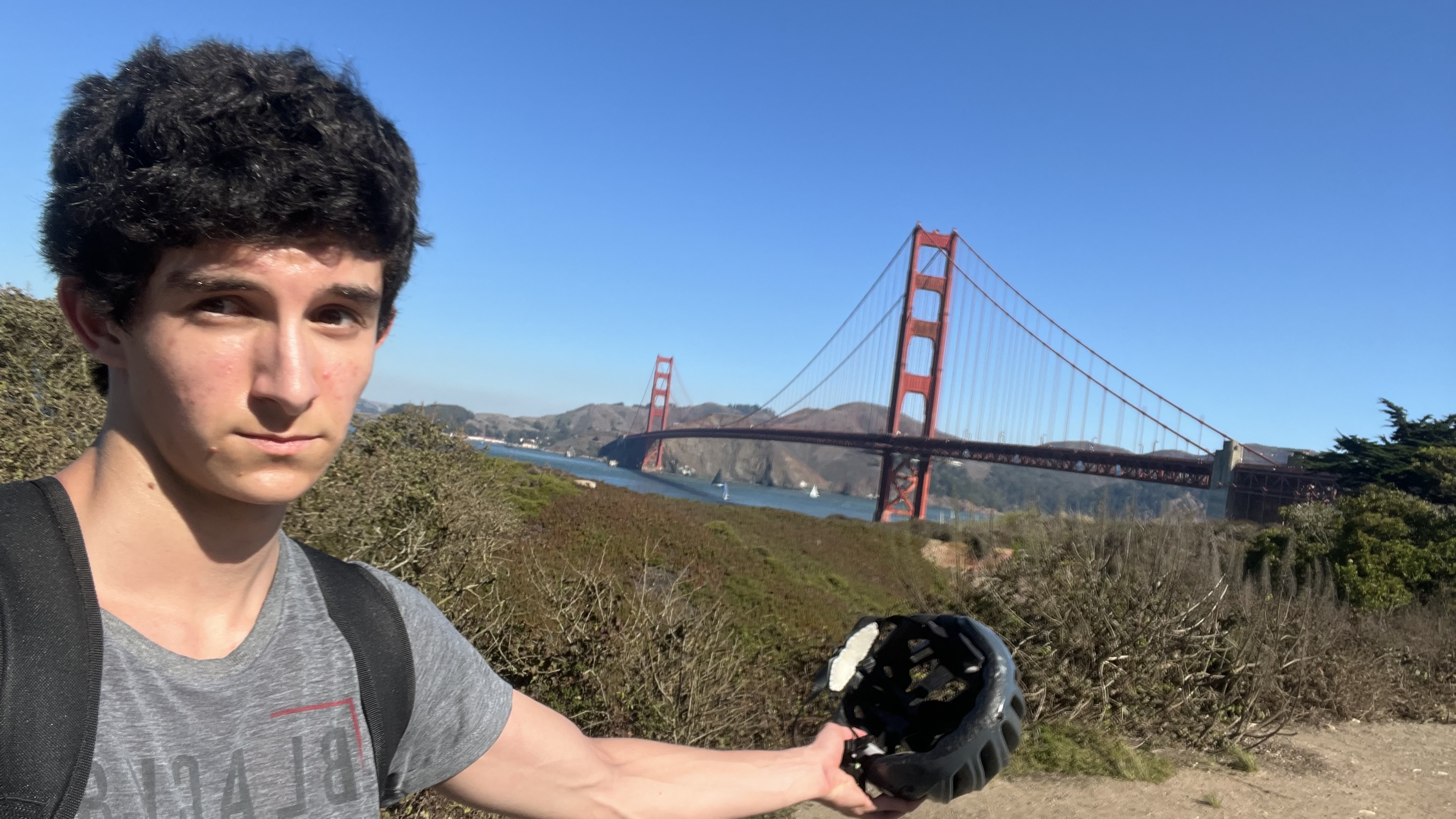
In September 2025, Gadi told me he was about to announce the 2nd cohort of Puentes, which was taking place in October. He invited me, and I rejected it, reasoning that I planned to spend that month writing my college essays. Thankfully, a week later, Gabriel and Paske made me rethink the decision. They argued that not everyone had this opportunity, and that the alternatives were either to write the essays at school or write them after talking with Guillermo Rauch. I hadn't thought about it that way; they were right, so I followed their advice.
I arrived at the US customs in Houston, Texas, and the security guard asked me the typical "business or leisure" question. "Business," I said, though it wasn't completely one or the other. A few clicks and keystrokes later, he called another officer to go away with me. He took me to the so-called little room, a place with people who seemed quite different than the rest in the line. A few minutes later, the desk officer called me and started interrogating me. He wondered, "how can you be a software developer so young and without a degree?" I explained to him briefly. He then criticized the Silver.dev website as a scam, but finally let me go, given that I had nothing to hide and it was clear that I would return to Argentina in the short term.
So, I could arrive in SF for the first time. The trip wasn't long (just a week), but it was great enough to reinforce my desire to move there for, at least, a few years more. Just as if you want to be a great football player you should go play in the Premier League, if you're into tech and/or startups you should go work in this city.
19–¿?: The College Experience™
In progress, at Minerva University... So far so good.